
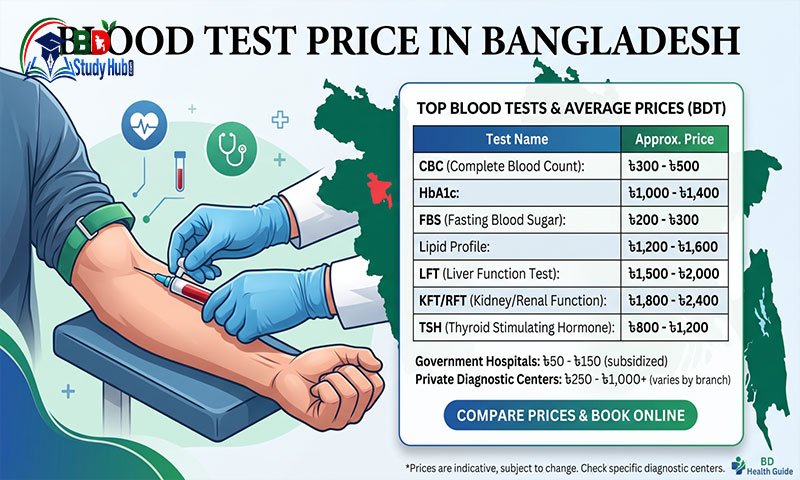
A blood test is one of the most common medical investigations in the world. Doctors use it to check your general health, find the cause of symptoms, monitor long-term conditions and track how well a treatment is working. If you have been asked to get a blood test, you will naturally want to know the cost. The blood test price in Bangladesh starts at around 50 BDT in a government hospital and goes up to about 360 BDT at some private diagnostic centers after discount.
In this guide, we have gathered the blood test cost at 18 well-known hospitals and diagnostic centers across Bangladesh. You will also learn what a blood test involves, which types are common, how to prepare, and how to save money without compromising on quality.
What Is a Blood Test?
A blood test is a laboratory examination of a small sample of your blood, usually taken from a vein in your arm. The sample is analyzed to measure different components such as blood cells, sugar, fats, hormones, vitamins, enzymes and chemicals. It may also be used to detect infections or check how well your organs, such as the liver, kidneys and thyroid, are working.
Because blood travels through the whole body, it carries important information about your health. That is why a blood test is often the first step when a doctor wants to understand what is going on inside your body.
Why Do Doctors Recommend Blood Tests?
A doctor may suggest a blood test for many reasons, such as:
- A routine health checkup or annual screening
- Tiredness, weakness, fever or unexplained weight changes
- Suspected anemia or infection
- Diagnosing or monitoring diabetes, thyroid problems, cholesterol issues or kidney and liver conditions
- Checking vitamin and mineral levels
- Preparing for surgery or a medical procedure
- Pregnancy care and antenatal screening
- Monitoring how well a medicine is working
- Screening for certain diseases in people with risk factors or a family history
Early detection through blood testing can help doctors start treatment sooner and improve the chance of a good outcome.
Blood Test Price in Bangladesh
The table below shows the blood test price in Bangladesh at different hospitals and diagnostic centers, including the regular price, the discount offered, and the final price you pay.
| Hospital Name | Price (BDT) | Discount | Total Price (BDT) |
|---|---|---|---|
| Government Hospital | 50 | 0% | 50 |
| Popular Diagnostic Center | 400 | 20% | 360 |
| Ibn Sina Diagnostic Center | 350 | 25% | 260 |
| Islami Bank Hospital | 350 | 30% | 245 |
| LabAid Diagnostic Center | 350 | 20% | 280 |
| Apollo Diagnostic Center | 350 | 20% | 280 |
| Green Life Diagnostic Center | 350 | 25% | 260 |
| Al-Modina Diagnostic Center | 350 | 20% | 280 |
| Al Amin Diagnostic Center | 350 | 20% | 280 |
| Mission Hospital | 350 | 25% | 260 |
| Maa Diagnostic Center | 350 | 20% | 280 |
| General Hospital | 350 | 20% | 280 |
| Prime Diagnostic Centre | 350 | 25% | 260 |
| Delta Health Care | 350 | 20% | 280 |
| Shifa Diagnostic Center | 350 | 25% | 260 |
| Sheba Diagnostic Center | 350 | 20% | 280 |
| Doctor Diagnostic Center | 350 | 25% | 260 |
| Padma Diagnostic Center | 350 | 20% | 280 |
Note: The prices above are for a basic blood test. Prices and discounts can change at any time, and specialized tests cost more. Please confirm the latest rate with the hospital before booking.
Key Takeaways From the Price List
1. The government hospital is the cheapest. At only 50 BDT with no discount, it is the most budget-friendly option. You may face queues and a longer wait for the report, but the cost is very low.
2. Islami Bank Hospital has the lowest private price. Thanks to a 30% discount, its 350 BDT price drops to 245 BDT.
3. Popular Diagnostic Center is the most expensive. Its regular price is 400 BDT, and the final price is 360 BDT.
4. Six centers charge 260 BDT. Ibn Sina, Green Life, Mission Hospital, Prime, Shifa and Doctor Diagnostic Center all offer a 25% discount.
5. Nine centers charge 280 BDT. LabAid, Apollo, Al-Modina, Al Amin, Maa, General Hospital, Delta, Sheba and Padma all give a 20% discount.
6. The average final price is about 263 BDT. This is across all 18 places. If you leave out the government hospital, the private average is around 276 BDT.
7. Discounts range from 20% to 30%. Almost every private center offers a discount, so always ask about current offers before paying the full price.
8. The gap between private centers is small. The difference between the cheapest and the costliest private center is about 115 BDT. For blood tests, accurate results and a trusted laboratory matter more than a small difference in price.
Common Types of Blood Tests
“Blood test” is a broad term. There are hundreds of different tests, and the price depends on which one your doctor orders. Some of the most common are:
Complete Blood Count (CBC): Measures red cells, white cells, platelets and hemoglobin. It helps detect anemia, infection and other blood problems.
Blood sugar tests: Fasting blood sugar, random blood sugar and post-meal sugar help diagnose and monitor diabetes. HbA1c shows your average sugar level over the past two to three months.
Lipid profile: Measures cholesterol and triglycerides to assess heart health.
Liver function tests (LFT): Check how well the liver is working.
Kidney function tests: Measure substances such as creatinine and urea to assess the kidneys.
Thyroid tests: Measure thyroid hormones such as TSH, T3 and T4.
Vitamin and mineral tests: Include vitamin D, vitamin B12, iron and calcium.
Infection and inflammation markers: Include tests such as CRP and ESR, as well as tests for specific infections.
Blood grouping and cross-matching: Used before transfusion, surgery and pregnancy care.
The prices in our list refer to a basic blood test. More advanced tests, such as hormone panels, vitamin levels and special markers, cost more, so always ask the center for the exact rate of the test your doctor has ordered.
Factors That Affect Blood Test Cost
Why does the same test have different prices? Here are the main reasons:
- Type of test: A simple test costs much less than a hormone panel or a special marker.
- Type of facility: Government hospitals are subsidized, while private hospitals and diagnostic centers set their own rates.
- Laboratory technology: Labs with advanced automated analyzers and strict quality control may charge more.
- Accreditation and quality standards: Well-accredited laboratories invest more in calibration and staff training.
- Home sample collection: A visit to your home may add a service fee.
- Report delivery: Some centers charge extra for urgent or same-hour reports.
- Package deals: Health checkup packages often cost less than booking each test separately.
- Location: Prices in big cities may differ from those in smaller towns.
- Discount offers: As the table shows, discounts of 20% to 30% change the final price noticeably.
Is the Price Inclusive of Everything?
Not always. Before booking, ask the hospital these questions:
- Which exact test is covered by this price?
- Does the price include the printed report?
- Is there any sample collection or home service fee?
- How soon will the report be ready?
- Is there a package price if I need several tests?
Clear answers will help you avoid surprise charges.
How to Prepare for a Blood Test
Preparation depends on the type of test, so always follow your doctor’s instructions. These general tips apply to most people:
- Ask whether you need to fast. Some tests, such as fasting blood sugar and lipid profile, usually require you to avoid food and drinks other than water for around 8 to 12 hours. Many other tests, such as CBC, do not need fasting.
- Drink water. Staying hydrated makes it easier to draw blood. Plain water is usually fine even when fasting.
- Tell your doctor about your medicines and supplements. Some can affect results. Do not stop any prescribed medicine unless your doctor tells you to.
- Avoid heavy exercise and alcohol before the test, as they can influence some results.
- Get a normal night’s sleep and try to stay calm. Stress and poor sleep can affect certain values.
- Wear a short-sleeved or loose-sleeved shirt so the technician can reach your arm easily.
- Bring previous reports so your doctor can compare results over time.
What Happens During a Blood Test?
A trained technician cleans a small area of your arm, usually near the elbow, and ties a band above it so the veins are easier to see. A thin, sterile needle is inserted into a vein, and a small amount of blood is collected into one or more tubes. The band is removed, the needle is taken out, and a cotton ball or small bandage is placed over the spot. You may feel a quick pinch or sting, but the whole process usually takes only a few minutes. The tubes are then labeled and sent for laboratory analysis.
After the Test and Getting Your Report
After the blood is drawn, you can go back to your normal activities right away. If you were fasting, it is a good idea to eat something soon afterward. A small bruise or slight soreness at the needle site is possible but usually goes away in a few days.
Report timing depends on the test. A basic test may be ready within a few hours or on the same day, while special tests can take a few days. Do not try to interpret the report yourself. Reference ranges differ between laboratories, and a value outside the range does not always mean disease. Show the report to your doctor, who will explain the findings in the context of your symptoms and medical history.
Is a Blood Test Safe?
Yes. A blood test is a simple and safe procedure. The usual side effects are mild pain, a small bruise or temporary lightheadedness. Rarely, a person may faint or develop an infection at the needle site. If you feel nervous about needles or have fainted during blood draws before, tell the technician so they can make you more comfortable, for example by having you lie down.
Government vs Private Hospital
Government hospital: The cost is extremely low, which is very helpful for patients who need frequent testing. The drawbacks can be crowded waiting areas, longer waiting times and slower reports.
Private hospital or diagnostic center: You pay more, but you generally get faster service, comfortable facilities, flexible timing, and sometimes home collection. With discounts of 20% to 30%, the actual cost is lower than the listed price.
Your choice should depend on your budget, how soon you need the report, and how convenient the location is.
Tips to Save Money on Blood Tests
- Compare prices. Even small differences add up if you need regular tests.
- Ask about discounts. Some centers offer special rates for card holders, senior citizens and family health packages.
- Choose a package. If you need several tests, a checkup package may cost less than booking each one separately.
- Confirm the exact tests. Make sure you book only the tests your doctor has recommended.
- Keep your reports. Carrying earlier reports can prevent unnecessary repeat tests.
- Prepare properly. If you ignore fasting instructions, the test may need to be repeated, which means paying twice.
- Use health camps. Some hospitals and community programs offer free or low-cost screening.
FAQ
What is the average blood test price in Bangladesh?
Based on the hospitals in our list, the average final price for a basic blood test is about 263 BDT. Private centers mostly charge between 245 and 360 BDT after discount.
Which hospital has the cheapest blood test price?
The government hospital is the cheapest at 50 BDT. Among private centers, Islami Bank Hospital offers the lowest price at 245 BDT after a 30% discount.
Do I need to fast before a blood test?
It depends on the test. Tests such as fasting blood sugar and lipid profile usually need fasting, while many others do not. Ask your doctor or the laboratory when you book.
Can I drink water before a blood test?
Yes. Drinking plain water is generally allowed and often helpful, even when you are fasting.
How long does it take to get the report?
Basic tests are often ready the same day. Special tests may take a few days.
Is a blood test painful?
You will feel only a brief pinch or sting when the needle goes in.
Can I get a blood test without a doctor’s prescription?
Many diagnostic centers allow you to book common tests directly. However, it is best to follow your doctor’s advice so you take the right tests and understand the results correctly.
How often should I have a general health checkup?
It depends on your age, health and risk factors. Many adults benefit from a periodic checkup, but your doctor can tell you what is best for you.
Conclusion
The blood test price in Bangladesh ranges from about 50 BDT at a government hospital to around 360 BDT at some private diagnostic centers after discount. Most private centers charge either 260 or 280 BDT, and Islami Bank Hospital offers the lowest private price at 245 BDT.
Before choosing a hospital, compare prices, confirm which test is included, and ask about current offers. Most importantly, do not delay a blood test if your doctor has advised it. A simple and affordable blood test can detect health problems early, guide the right treatment and give you peace of mind.
Related Test Prices in Bangladesh
- HIV Test Price in Bangladesh All Hospital
- Vitamin D Test Price in Bangladesh All Hospital
- CBC Test Price in Bangladesh All Hospital
- TSH Test Price in Bangladesh All Hospital
- Thyroid Test Price in Bangladesh All Hospital
- Widal Test Price in Bangladesh All Hospital
See the full list of medical test prices in Bangladesh.
This page is for general information only and is not medical advice. Please talk to a qualified doctor about your tests and results.

1 thought on “Blood Test Price in Bangladesh All Hospital”