
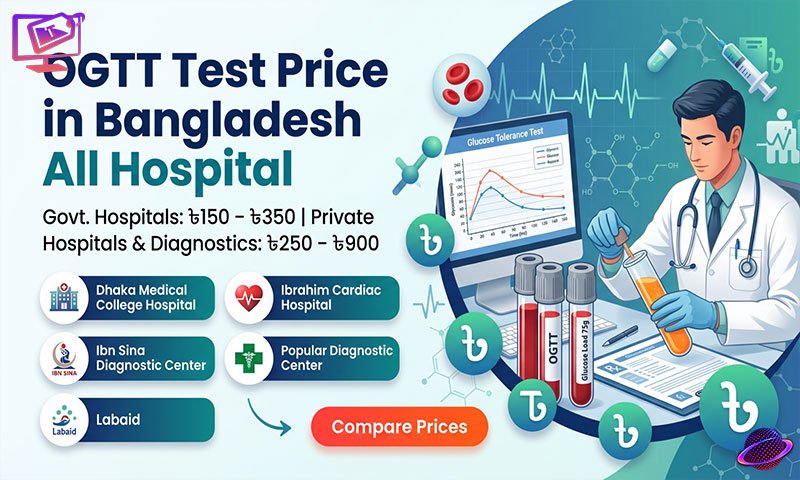
If your doctor suspects diabetes or you’re pregnant and need to be screened for gestational diabetes, the OGTT test is often the next step. If you’re searching for the OGTT test price in Bangladesh, this guide gives you an updated, hospital-wise price comparison along with everything you should know before booking the test.
What Is an OGTT Test?
OGTT stands for Oral Glucose Tolerance Test. It’s a blood test that measures how well your body processes sugar (glucose) over a period of time. Unlike a simple fasting blood sugar test that gives a single snapshot, OGTT tracks how your blood sugar level rises and falls after consuming a specific amount of glucose giving doctors a much clearer picture of how your body handles sugar.
This test is one of the most reliable methods for diagnosing diabetes, prediabetes, and especially gestational diabetes during pregnancy, since it reveals problems that a single fasting reading might miss.
Why Is the OGTT Test Important?
- Diagnoses diabetes and prediabetes, especially in borderline cases where fasting sugar alone isn’t conclusive
- Screens for gestational diabetes in pregnant women, typically between 24–28 weeks of pregnancy
- Detects impaired glucose tolerance, an early warning sign before full-blown diabetes develops
- Evaluates unexplained symptoms like excessive thirst, frequent urination, or unexplained fatigue
- Monitors at-risk individuals, such as those with a family history of diabetes or a history of high blood sugar
- Assesses metabolic health in patients with PCOS or obesity, both linked to insulin resistance
OGTT Test Price in Bangladesh
Below is an updated price comparison from popular hospitals and diagnostic centers across Bangladesh. Prices include the listed price, available discount, and the final total price you’re likely to pay.
| Hospital / Diagnostic Center | Price (Taka) | Discount | Total Price (Taka) |
|---|---|---|---|
| Government Hospital | 150 | 0% | 150 |
| Popular Diagnostic Center | 1200 | 20% | 960 |
| Ibn Sina Diagnostic Center | 1200 | 25% | 900 |
| Islami Bank Hospital | 1000 | 30% | 700 |
| LabAid Diagnostic Center | 1100 | 20% | 880 |
| Apollo Diagnostic Center | 1000 | 20% | 800 |
| Green Life Diagnostic Center | 1200 | 25% | 900 |
| Al-Modina Diagnostic Center | 1000 | 20% | 800 |
| Al Amin Diagnostic Center | 1000 | 20% | 800 |
| Mission Hospital | 1100 | 25% | 825 |
| Maa Diagnostic Center | 1000 | 20% | 800 |
| General Hospital | 1000 | 20% | 800 |
| Prime Diagnostic Centre | 1100 | 25% | 825 |
| Delta Health Care | 1000 | 20% | 800 |
| Shifa Diagnostic Center | 1200 | 25% | 900 |
| Sheba Diagnostic Center | 1100 | 25% | 825 |
| Doctor Diagnostic Center | 1000 | 20% | 800 |
| Padma Diagnostic Center | 1100 | 20% | 880 |
Note: Prices may vary by branch, city, and time. Diagnostic centers frequently update their discount offers, so it’s best to confirm the exact price by phone before visiting.
Cheapest Option
The Government Hospital offers the lowest fixed price at just ৳150, making it the most budget-friendly choice though waiting times and appointment availability can be longer compared to private centers.
Best Value Among Private Centers
Among private diagnostic centers, Islami Bank Hospital (৳700 after discount) offers the most competitive rate, noticeably lower than most other private centers on the list.
Why Does the Price Vary So Much Between Hospitals?
If you’ve compared a few hospitals already, you’ve probably noticed the price for the exact same test can differ noticeably. Here’s why:
- Government vs. private facilities: Government hospitals are subsidized and charge a flat, low fee. Private hospitals and diagnostic chains operate as businesses, so their base prices are higher — but they usually offer standing discounts to stay competitive.
- Number of samples taken: A standard 2-hour OGTT involves at least two blood draws (fasting and 2-hour), but some protocols require a 3-sample test (fasting, 1-hour, and 2-hour), which can affect pricing.
- Glucose solution cost: The price often includes the standardized glucose drink given during the test.
- Brand and reputation: Larger, well-known diagnostic chains often price slightly higher due to lab accreditation and quality control standards.
- Location and overhead costs: A diagnostic center in a prime Dhaka location has higher operating costs than one in a smaller town, and this is reflected in pricing.
Who Should Get an OGTT Test?
You may need this test if you fall into any of these categories:
- You’re pregnant, typically between 24–28 weeks, as part of routine gestational diabetes screening
- Your fasting blood sugar result was borderline or inconclusive
- You have symptoms of diabetes, such as excessive thirst, frequent urination, or unexplained fatigue
- You have a family history of diabetes
- You’ve been diagnosed with PCOS, which is linked to insulin resistance
- You’re overweight or obese, both risk factors for prediabetes and diabetes
- You had gestational diabetes in a previous pregnancy and need re-screening
How to Prepare for the Test
Preparation for an OGTT is more involved than a routine blood test:
- Fast for 8–12 hours before the test — usually overnight, with only water allowed.
- Avoid changing your diet drastically in the days before the test, as this can affect results; eat normally in the days leading up to it.
- Avoid strenuous exercise on the morning of the test.
- Inform the lab about any medications, especially steroids or certain hormonal medications, which can affect blood sugar levels.
- Plan for the full duration of the test — it typically takes 2 hours or more, so bring something to occupy your time.
How the Test Is Done
The OGTT is done in several steps:
- A fasting blood sample is taken first to measure your baseline sugar level.
- You then drink a glucose solution (usually containing 75g of glucose) within a few minutes.
- Blood samples are taken again at set intervals — commonly at 1 hour and 2 hours after drinking the solution.
- You’ll need to stay at the center during this time, avoiding food, exercise, and sometimes even walking around too much, as this can affect results.
Results are typically available within a few hours to a day, depending on the lab.
Frequently Asked Questions
Q: How long does the OGTT test take? A: The full test usually takes about 2 hours, including the waiting period between blood draws.
Q: Is the glucose drink included in the price? A: Yes, in most cases the price listed includes the standardized glucose solution given during the test.
Q: Can I eat or drink anything during the test? A: No, you should avoid eating, drinking anything other than water, smoking, or exercising during the testing period, as this can affect your results.
Q: Why is OGTT preferred over fasting sugar during pregnancy? A: OGTT tracks how your body responds to sugar over time, making it far more accurate for detecting gestational diabetes than a single fasting reading.
Q: Will I feel unwell after drinking the glucose solution? A: Some people feel mild nausea, dizziness, or sweating after the glucose drink, but this is usually temporary and resolves quickly.
Final Thoughts
The OGTT test price in Bangladesh typically ranges from ৳150 at government hospitals to ৳1,200 at premium private diagnostic centers, with most private centers bringing the final cost down to ৳700–৳960 after standard discounts. Since this test plays a key role in diagnosing diabetes and gestational diabetes early, it’s a worthwhile investment especially for pregnant women and those with risk factors for diabetes.
Before booking your test, compare a few nearby options using the table above, confirm the number of blood draws included in the price, and choose a center that can accommodate the full 2-hour testing window comfortably.
Related Test Prices in Bangladesh
- ETT Test Price in Bangladesh All Hospital
- FNAC Test Price in Bangladesh All Hospital
- FT4 Test Price in Bangladesh All Hospital
- Thyroid Test Price in Bangladesh All Hospital
- HbA1c Test Price in Bangladesh All Hospital
- VDRL Test Price in Bangladesh All Hospital
See the full list of medical test prices in Bangladesh.
This page is for general information only and is not medical advice. Please talk to a qualified doctor about your tests and results.
